

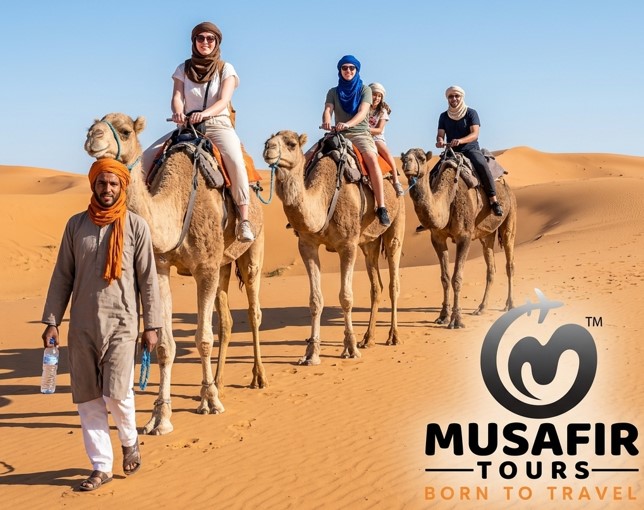
A Complete Plan for 2026-27
This Morocco Travel Guide for Bangladeshi Travelers gives you what most blogs skip: a clear path through the visa, a realistic budget in plain numbers, and a route that makes sense for first-time visitors from Dhaka, Chattogram or Sylhet.
Morocco is a Muslim-majority country on the north-western tip of Africa, with mosques at every corner, halal food on every street and old walled cities that feel like living history. It is also getting popular fast. The Ministry of Tourism reported a record 19.8 million visitors in 2025, about 14 percent more than the year before.
In this guide, you will learn how the visa works for a Bangladeshi passport, when to go, where to go, what it costs and how to stay safe. musafirbd also shares how we help travellers plan the trip.
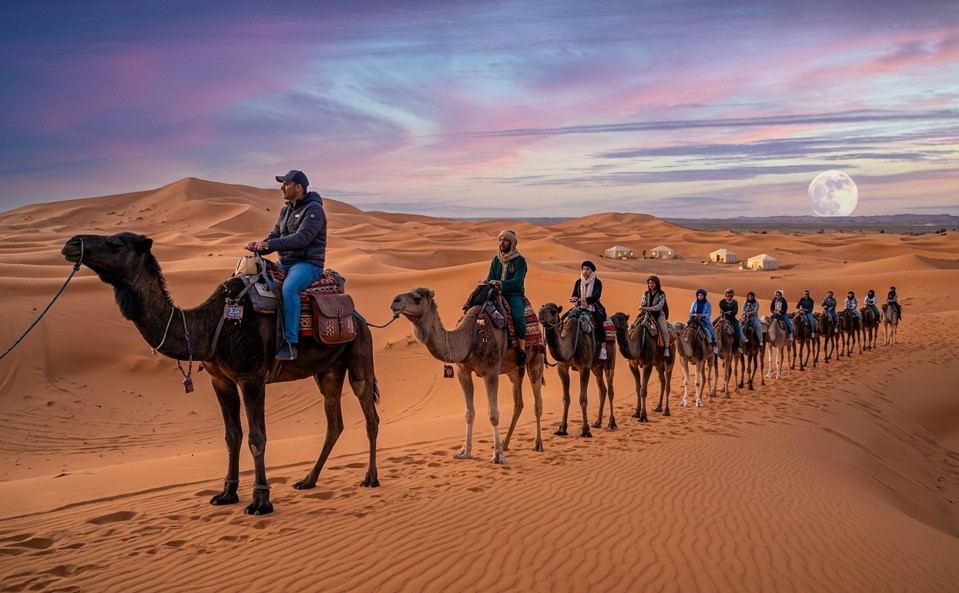
Table of Contents
- Why Morocco Works Well for Bangladeshi Travelers
- Visa Rules in This Morocco Travel Guide for Bangladeshi Travelers
- Best Time to Visit
- Top Places to See
- Sample Itineraries
- Budget and Costs in Our Morocco Travel Guide for Bangladeshi Travelers
- Halal Food, Prayer and Local Etiquette
- Safety and Common Scams
- Frequently Asked Questions
- Conclusion
Why Morocco Works Well for Bangladeshi Travelers
Morocco feels familiar in ways that surprise many Bangladeshi visitors. The call to prayer, the sweet mint tea, the busy bazaars and the habit of bargaining are all easy to relate to.
For Muslim travellers, the practical benefits are real. Halal food is the default, prayer spaces are easy to find and families are welcome almost everywhere. You do not need to search for a halal restaurant, since almost every meal is halal.
The country also packs huge variety into a small area. In one trip, you can walk through a thousand-year-old medina, ride a camel into the Sahara, sit in a blue mountain town and stroll along an Atlantic beach. That range is what makes this Morocco Travel Guide for Bangladeshi Travelers useful for first-timers, couples and families alike.
Visa Rules in This Morocco Travel Guide for Bangladeshi Travelers
Visa rules are the first thing to check, and they can change. As of the sources we reviewed in October 2026, Bangladeshi citizens need a visa to enter Morocco.
There are two broad routes. The table below gives a simple overview.
| Route | Who can use it | What to know |
| Sticker visa | Bangladeshi passport holders without another qualifying visa | Apply at a Moroccan embassy or consulate that handles Bangladesh |
| e-Visa | Holders of certain valid visas, such as Schengen, US or UK | Apply online, single entry, up to 30 days, requires the qualifying visa to be valid for a minimum period |
Some travellers who already hold a valid multiple-entry visa from the Schengen area, the USA or the UK can apply for a Moroccan e-visa online. It usually allows a single entry and a stay of up to 30 days. The qualifying visa normally has to stay valid for at least 90 days after your arrival date.
Everyone else generally applies for a sticker visa at a Moroccan embassy or consulate. Because embassy coverage and procedures change, confirm the current process with the embassy first and check the official Moroccan e-visa portal, acces-maroc.ma.
A word of caution: many private websites sell Morocco visa help. Some are useful, but they add service fees and are not government sites. Always compare their claims with the official portal or the embassy before paying.
Documents You Will Likely Need
Requirements differ by route, so confirm the exact list. In general, prepare these:
- Passport valid for at least six months, with blank pages
- Recent colour passport photo with a plain background
- Confirmed hotel booking for your stay
- Return flight ticket
- Bank statements and proof of income or business
- A scan of your Schengen, UK or US visa if you use the e-visa route
- Travel insurance, which is strongly recommended
Best Time to Visit
Morocco’s weather varies by region, so the best month depends on where you plan to go. Spring and autumn are usually the safest bet for a first trip covering several cities.
| Season | Months | What to expect |
| Spring | March–May | Mild days, green countryside, comfortable for cities and hiking |
| Summer | June–August | Very hot inland, including Marrakech; coast is cooler and busier |
| Autumn | September–November | Warm and pleasant, good for the Sahara and cities |
| Winter | December–February | Cool in cities, cold nights in the desert and snow in the Atlas |
Travel guides often call March to May and September to November the most balanced periods for trips that cover more than one region. Inland cities such as Marrakech can become extremely hot in summer, and desert nights turn cold outside the warm months.
Ramadan is worth planning around. Its dates shift each year, and meal times and business hours change during the fasting month. Many Bangladeshi families actually enjoy the atmosphere, especially the evening iftar, but some restaurants and sights keep shorter hours during the day.
Top Places to See
Most first-time routes in this Morocco Travel Guide for Bangladeshi Travelers link five or six places. Here are the ones that deserve your time.
Marrakech
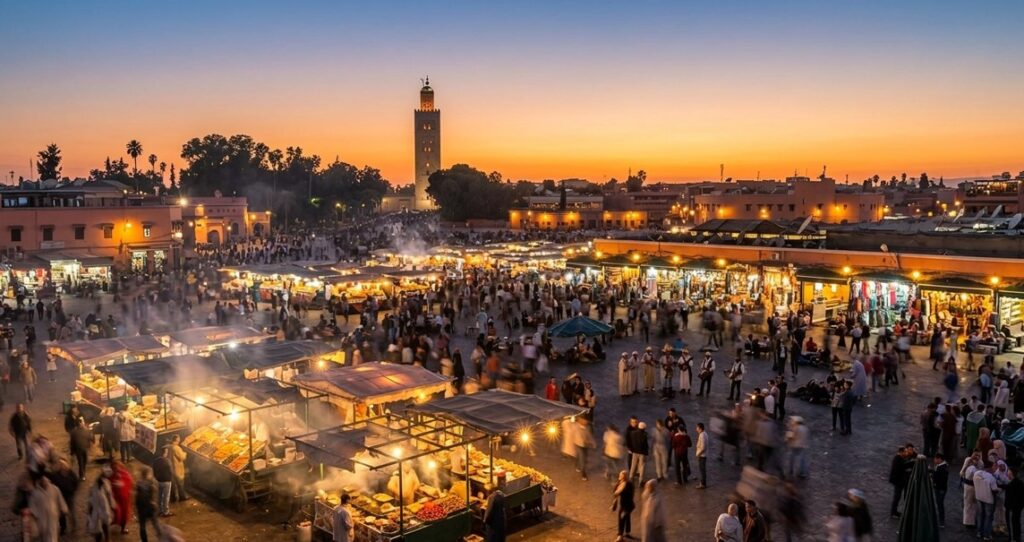
Marrakech is the energetic heart of the country. The main square, Jemaa el-Fnaa, comes alive at sunset with food stalls, musicians and storytellers. The surrounding souks are a maze of spices, leather, lamps and carpets.
Fes
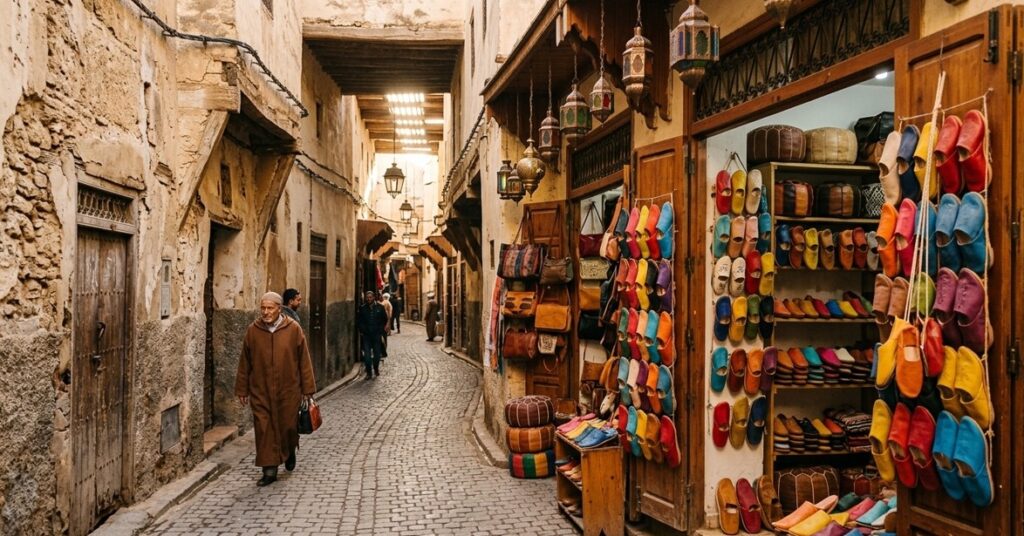
Fes has one of the largest car-free urban areas in the world and a medina packed with workshops. The university of Al-Qarawiyyin, founded in 859, is often described as one of the oldest still-operating universities. The tanneries are impressive, though the smell is strong.
Hire a licensed guide for your first day, since the narrow lanes confuse even confident travellers.
Chefchaouen
The blue-washed mountain town of Chefchaouen is calm, photogenic and cooler than the big cities. Walk uphill early, before the tour groups arrive, and enjoy tea at a rooftop café.
The Sahara at Merzouga
A night in a desert camp is the trip many travellers remember most. You ride camels at sunset, eat dinner under the stars and wake up to dunes glowing orange. Pack a warm layer, since the desert gets cold at night.
Casablanca and Rabat
Casablanca is home to the Hassan II Mosque, one of the largest mosques in the world, with a minaret that rises to around 210 metres. Rabat, the capital, is calmer and cleaner and works well as a gentle first stop.
Sample Itineraries
Most readers of this Morocco Travel Guide for Bangladeshi Travelers choose between a week and ten days on the ground. The table shows how a route can look.
| Plan | Route | Highlights |
| 7 days | Casablanca → Chefchaouen → Fes → Marrakech | Hassan II Mosque, blue town, medina, souks |
| 10 days | Casablanca → Rabat → Chefchaouen → Fes → Merzouga → Ait Benhaddou → Marrakech | Adds Sahara camp, kasbahs and mountain drives |
Distances are long. A road trip from Fes to Merzouga can take most of a day, so avoid squeezing too much in. A good rule is one big stop every two days, with lighter days in between.
Flights from Dhaka usually involve one stop, often through a Gulf or Turkish hub, and the total journey commonly takes well over half a day. Plan to arrive in Casablanca or Marrakech and leave from a different city to avoid backtracking.
Budget and Costs in Our Morocco Travel Guide for Bangladeshi Travelers
Costs depend on your style. The ranges below are rough planning figures per person per day, excluding international flights and visa fees. Treat them as a starting point, since prices and exchange rates change.
| Style | Approx. daily budget | What it covers |
| Budget | USD 40–60 | Simple riad or guesthouse, local meals, shared transport |
| Mid-range | USD 80–130 | Nicer riad, private transfers, a guided day or two |
| Comfortable | USD 150 and above | Boutique stay, private driver, desert camp upgrades |
Morocco’s currency is the dirham (MAD). Cash is still king in markets, taxis and small cafés, though cards work in bigger hotels and restaurants. Withdraw dirhams from ATMs rather than changing a large sum at the airport, and keep small notes for tips and taxis.
Bargaining is normal in souks. Start at about half the first price and settle somewhere in the middle, always with a smile.
Halal Food, Prayer and Local Etiquette
Eating is easy in Morocco, which is a big reason this Morocco Travel Guide for Bangladeshi Travelers recommends it for families. Tagine, couscous, harira soup and grilled meat are all halal, and street food is cheap and tasty. Mint tea is served everywhere as a sign of hospitality.
Some practical points for Muslim travellers:
- Halal is the norm, so you rarely need to ask, though alcohol is served in some hotels and restaurants
- Most mosques are open to Muslims for prayer, while many are closed to non-Muslim visitors
- Prayer times follow the usual schedule, and many hotels can share qibla direction
Dress modestly in medinas and villages. Loose cotton clothes that cover shoulders and knees are comfortable and respectful. Women are not required to cover their hair, but a light scarf is handy when entering religious sites.
Safety and Common Scams
Morocco is generally welcoming, and violent crime against visitors is uncommon. The usual problems are small annoyances, mostly around money and directions.
Watch out for these:
- Fake guides: People who offer to show you the way in the medina and ask for payment later
- Taxi pricing: Drivers who refuse the meter, so agree on a price first or insist on the meter
- Pushy sellers: A polite “no, thank you” and a steady walk usually works
Keep a copy of your passport, carry only the cash you need, and use hotel safes. Check the latest advice from Bangladesh’s foreign ministry and fromVisit Morocco, the official tourism site, before you travel.
A Short Real-World Example
Imagine two friends from Dhaka who pack Marrakech, Fes, the Sahara and the coast into ten days. By day four, they are tired, car-sick and behind schedule, so they skip the desert.
Now imagine the same friends with a slower plan and an extra night in the desert camp. They return with better photos and more energy. The difference is not money. It is pace.
Frequently Asked Questions
Do Bangladeshi citizens need a visa for Morocco?
Yes. Bangladeshi citizens need a visa to enter Morocco. Holders of certain valid visas, such as a multiple-entry Schengen, US or UK visa, may be able to apply for an e-visa online. Everyone else usually applies for a sticker visa at an embassy or consulate. Always confirm on official sources.
How long can I stay in Morocco?
Tourist visas and e-visas typically allow up to 30 days for a single entry. Extensions are decided by Moroccan authorities and are not automatic.
What is the best time for this Morocco Travel Guide for Bangladeshi Travelers?
Spring (March to May) and autumn (September to November) are the most balanced for multi-city trips. Summer is very hot inland, and winter nights in the desert and mountains are cold.
Is Morocco halal-friendly?
Very. Halal food is the default, and prayer facilities are easy to find. Alcohol is available in some hotels and restaurants, so choose your places according to your comfort.
Is Morocco safe for families and solo women?
Most visitors have a trouble-free trip. Dress modestly, avoid empty lanes at night, use licensed guides and agree on prices upfront. Solo women may attract more attention, so choose well-reviewed riads and trusted drivers.
Final Tips from This Morocco Travel Guide for Bangladeshi Travelers
A few habits make a big difference to your experience:
- Start the visa process early, since embassy and portal timelines can change
- Book riads with good recent reviews and ask about airport pickup
- Carry cash in small notes and keep card use for larger bills
- Pack comfortable shoes, a light scarf, a warm layer and a power adapter
Conclusion
A good Morocco Travel Guide for Bangladeshi Travelers comes down to four things: sort out the visa early, pick the right season, keep the route realistic and respect local customs. Do that, and the country rewards you with food, culture and landscapes that are hard to find in one place.
If you want help turning this plan into a real trip, musafirbd can guide you through the visa steps, build a route that fits your days and budget, and stay in touch from booking to return. Send us your travel month, group size and budget, and we will put together a clear, itemised plan.